Ceiling systems should take centre stage when planning an interior design project. Despite their often-neglected status and the impression that they are nothing more than a covering, ceilings are crucial to a room’s appearance, comfort, functionality, and ambience. The right ceiling can turn a plain room into a stylish living area, a trendy office, or an upscale commercial space.
Sound and music are just the first step in any ceiling system. Beyond aesthetics, ceilings perform several important tasks, including hiding electrical wires, plumbing, air conditioning pipes, and other utility systems. Ceiling systems can also be employed to achieve good acoustics, a comfortable indoor climate, and enable unique lighting systems.
However, choosing the right ceiling for your house or flat can be tricky because there are so many ceiling materials, designs, and applications. Nonetheless, knowing the basic ceiling types will help you make a good choice by considering the project price, style, and service.
-
Gypsum Ceiling
Gypsum ceilings have gained popularity in contemporary homes and businesses since they consist of gypsum board attached to either a metal or wooden skeleton, producing a flat surface. Gypsum ceilings are also versatile, as they can be made in different shapes, heights and designs, producing everything from simple designs to complex decorative ceilings.
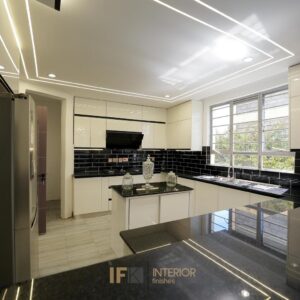
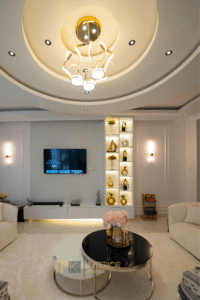
These ceilings are also ideal for incorporating recessed lighting, LED strip lights, hidden lighting, and designer fittings, as they let you hide utilities while giving interiors a clean, classy look. Most suited for Living rooms, bedrooms, offices, meeting rooms, hotels, restaurants, and shops.
-
PVC Ceiling
Ceilings made from PVC (polyvinyl chloride) are created through the combination of light plastic panels that become interlocked to generate a seamless look. They are becoming more popular because of their low price and ease of installation. Some types of these ceilings are designed to resemble natural materials such as wood and marble.
Moreover, they have high moisture resistance so they can be used in humid environments. In addition, they are also easy to clean. On the other hand, PVC ceilings do not provide the upscale look of some other ceiling systems. Therefore, their quality, ability to reduce fire risk, and suitability for use must be evaluated before buying and installation.
Most suitable for kitchens, bathrooms, utility spaces, homes, and certain commercial spaces.
-
Suspended or Drop Ceiling Systems
Suspended ceilings, which are also referred to as drop ceilings, are constructed below the primary ceiling, supported by a grid of metal framework. The metal framework supports removable tiles or ceiling panels. This creates a gap between the real ceiling and the new ceiling.
This gap can hide electrical devices, air conditioning channels, pipe systems, or communication cables. Accessibility is the main advantage of suspended ceilings. The panels can be removed for any maintenance or troubleshooting. Suspended ceilings can be made with different tile types for noise absorption and improved acoustics.
They are most suitable for corporate office spaces, hospitals, educational establishments, shopping malls, and commercial buildings.
-
Wooden Ceiling
Wooden ceilings add warmth, a natural look, and design elegance. They can be made of either regular timber boards, engineered wood or wood lookalikes. Chosen based on the style, wooden ceilings can evoke a rustic, old-fashioned, modern, fashionable, or luxurious interior. When matched with suitable flooring, furniture, and lighting, they perform best.
Wooden plank ceilings are also popular in corporate and commercial designs as they add a nice aesthetic touch and can be used with soundproof material. Nevertheless, wood must be treated properly to protect it from moisture, termites, and other forms of decay. The price is also likely to be high depending on the type of wood and installation peculiarities.
Best used for: Living rooms, restaurants, hotels, executive offices, reception areas, and high-class apartments.
-
Metal Ceiling Systems
Metal ceilings are made from raw materials such as aluminium, steel, and other metals. Metal ceilings come in several formats, including linear strip ceilings, perforated ceilings, and modular ceilings. These ceiling types are designed for commercial and public buildings because they are durable and require little maintenance. Perforated ceilings also provide access to materials designed for smooth sound absorption. Another key advantage of metal ceilings is that they can create beautiful, modern interiors.
-
Concrete or Exposed Ceiling Systems
Concrete ceilings have gained a lot of traction in industrial, minimalist, and contemporary design. Instead of using a standard ceiling system approach, this style permits leaving the structural slab intact, without using another ceiling. This exposes the raw concrete, beams, and building utilities. The result is a very industrial look and gives a room a sense of space, particularly when it has low ceilings. Additionally, this can lower ceiling material costs and make mechanical services easier to access. On the negative side, all visible installations must be done properly and blended in to keep the room looking neat.
Best for: industrial offices, modern houses, creative studios, restaurants, and business stores.
-
Stretch Ceiling Systems
The ceiling stretchers consist of a thin, flexible PVC membrane or specially manufactured fabric, which is held to the ceiling perimeter. Due to this flexibility, various finishes can be used – from gloss to matte, satin, translucent, etc. One of the biggest advantages of stretch ceilings lies in creating luminous ceilings with light sources mounted behind the translucent membrane. Stretch ceilings are a great option for Nairobi homeowners who want unique decorative solutions without traditional ceiling methods.
Ideal for high-end residences, luxury hotels, restaurants, showrooms, reception areas, and upscale offices.
How Do You Choose the Right Ceiling System?
It’s important to think about many different factors when deciding on ceiling systems, for example:
- Analyse your overall budget for materials and installation costs, construction details, lighting, and maintenance.
- Know what functionality you need, such as sound control, moisture control, or easy access to utilities.
- Choose a ceiling style that matches the design of your furniture and flooring, for example.
- Ceiling height is also vital, as certain systems need more space for installation.
- Consider your ceiling’s maintenance and how easy it will be to clean.
- Use professionals for precise measurements and proper installation.
Conclusion
Ceiling systems serve the vital purpose of ensuring the functionality, dynamics, and aesthetics of any indoor space. One can find different types of ceiling systems, whether it is the flexibility of gypsum ceilings, the advantages of suspended ceilings, the warmth of wood or the trendy style of exposed concrete ceilings.
Eventually, ceiling systems that suit your house or office best are determined by your design preferences, needs, budget and the space features. If you do not know which ceiling you should prefer, it can be useful to turn to an interior designer and a specialised technical designer.